
Where the money is
Ask anyone in this field where the value sits and they will tell you the same thing. Not in the sequencing, which is close to a commodity. Not in the pipeline, which several organizations now publish openly.
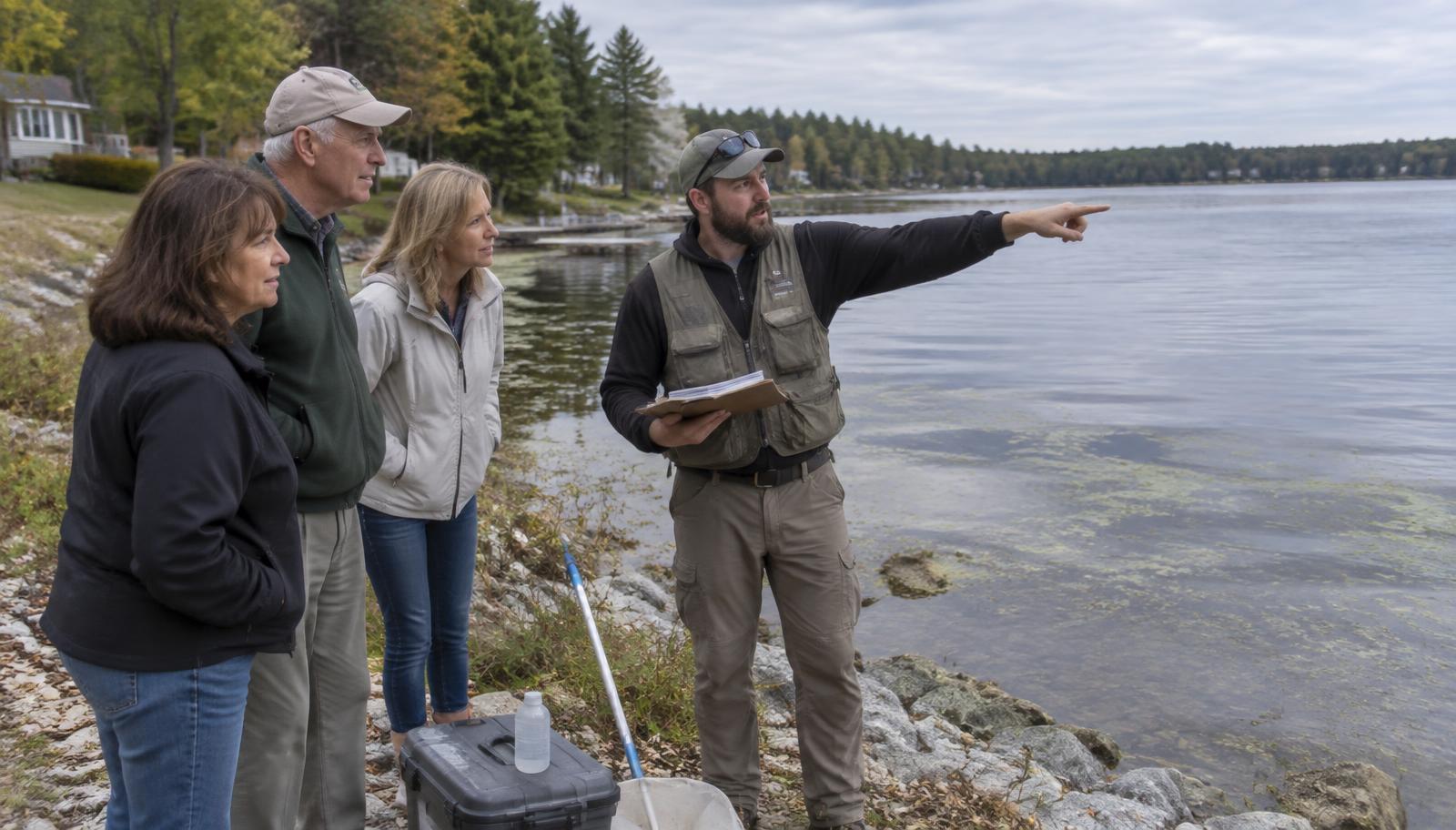
It sits in the last mile — the step from a list of taxa to a sentence somebody can act on. This lake is in worse condition than it was. That invasive has arrived and you have about a season. The restoration worked.
That step is where a species list becomes a decision, and a decision is the only part of this anybody actually pays for.
So it is entirely rational that organizations building interpretive layers want to occupy it. That is where the margin is, and the technical work involved — model output to plain-language report — is genuinely hard and genuinely useful.
We have decided not to go there, and the reasoning is worth setting out because it is not modesty.
An organization that defines how results are expressed, and also sells the interpretation of them, has a conflict that no amount of open licensing resolves.
The first reason: you cannot govern both
A reference layer decides how results are expressed. Which reference databases, at which versions, what confidence a detection needs, how a taxon is named when the sequence maps to a complex rather than a species.
Those decisions determine what an interpretation can say.
If the same organization also sells interpretations, then every one of those decisions has a second consequence it should not have. A threshold set slightly one way produces more detections and more to interpret. A naming convention that resolves ambiguity in a particular direction makes a particular kind of report easier to write.
Nobody has to act in bad faith for this to be a problem. The decisions are genuinely difficult and reasonable people disagree about them. That is exactly why the party making them should have no stake in which way they go.
Publishing the standard openly does not fix this. Open licensing determines who may use the decisions. It says nothing about who makes them, or what they stand to gain.
The second reason: it competes with the people we need
The consultancies, agency scientists and laboratory staff who actually interpret environmental DNA results are the same people whose adoption a reference layer depends on.
An organization that hands them a standard with one hand and competes for their interpretation work with the other is not a reference layer. It is a competitor with a specification attached.
This is the same argument we have made about why a laboratory cannot operate this — and it applies to us with exactly the same force. A reference layer cannot sell the thing its adopters sell. The moment it does, every decision it makes becomes suspect to the people best placed to check its work.
The third reason: interpretation does not travel
There is a practical objection alongside the structural one.
Interpretation is local in a way comparability is not. What a detection means depends on the waterbody, the regulation, the history of the site, what was there before, what the decision actually is, and what happens if you are wrong.
A person who has worked a river system for twenty years knows things about it that are not in any dataset. A tribal natural resource department knows what a detection means on its own waters in ways an outside organization cannot and should not assert.
A reference layer operating nationally cannot hold that knowledge, and should be suspicious of any system that claims to. Generalizing interpretation across contexts is exactly the operation that strips out the local knowledge that made it correct.
We can tell you that two results are comparable and how each was produced. We cannot tell you what they mean for your lake, and we would be overreaching to try.
What we hand back, and where we stop
We hand back:
- A species list produced through a documented, versioned pipeline
- A persistent identifier for every sequence, stable across laboratories and years
- An assurance record — method, versions, controls, thresholds, replicate structure, and what was not recorded
- Results that can be placed alongside anybody else's produced the same way
We do not hand back:
- An ecological assessment
- A condition score, index or rating
- A recommendation
- A judgment about whether a laboratory did good work
- An answer to what any of it means
The species list, the identifiers and the record are where we stop. What happens next belongs to whoever knows the system.
This is a smaller business
We should be honest that this is a constraint with a price.
Interpretation is where the margin is. A company selling ecological assessment charges considerably more per sample than one selling comparability, and it has a much more interesting story to tell an investor. Declining to enter that market caps what Common Measure can become.
We think the trade is correct, for a reason that is about durability rather than virtue.
A reference layer only works if people trust the decisions inside it — and trust in those decisions is the entire asset. It is slow to build, it is the only thing that makes the specification worth adopting, and it can be destroyed by a single well-founded suspicion that a threshold was set to suit our own product.
A larger business with a compromised reference layer is not a bigger version of this company. It is a different company with a worse product.
The line to hold us to
There is a version of this that drifts. It starts with a summary, because customers ask for one. Then a score, because summaries are hard to compare. Then a benchmark, because scores invite comparison. Each step is small and each is justified by a customer request.
So the commitment is written where it is hard to move: never sell interpretation, alongside never running a sample, never holding equity in a laboratory, and never charging for the specification. Changing any of them requires approval from a committee on which we hold no vote.
If you ever see us publish a condition score, an ecosystem health index or a recommendation about what a detection means, something has gone wrong. Say so loudly.
One sentence
There is a version of this company that is worth more money and worth less to the field.
We would rather be the smaller one.