This is the free side.
Common Measure has two sides. The paid side processes samples and produces signed assurance records, mostly for laboratories and the organizations that commission them. The free side is everything anyone needs to read, check and rely on an eDNA result without trusting us or paying us: the specification, the vocabulary, the comparability method, validation data once published, Science Committee proceedings, the validator and the SPIN lookup.
Using the free side takes an account, verified by email. The account is free, and it stays free.
The three people below are composites, not customers. Common Measure launches in 2027, and these examples show how the free side is designed to work.
Same trout. New lab. Is that a decline?
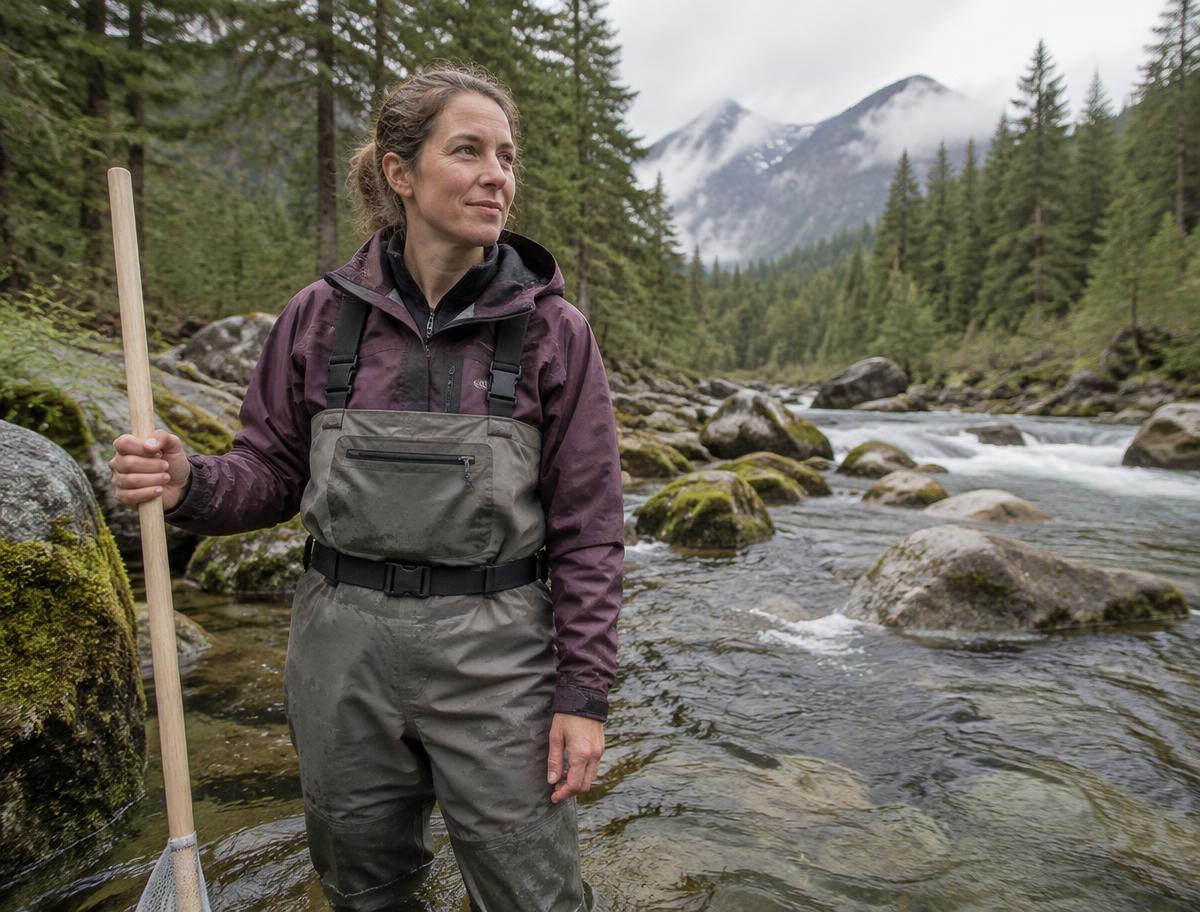
Before Common Measure, the headache was real. Dana tracks a listed trout across 40 streams. One laboratory ran her 2024 surveys. A second won the 2026 contract on price. This year, detections dropped in nine streams, and her director wants to know whether the trout is declining. Dana can't tell. The first lab reported detections "in 3 of 3 replicates," meaning three water bottles taken across the stream. The second lab uses the same phrase for one bottle tested three times. The second lab also reports some detections only to genus, where the first named the species. She has two reports that look alike and measure different things.
What she used
- The vocabulary, to read both reports in the same terms. "Replicate" has one defined meaning, and every conforming record states which kind it used. Dana can see that the new lab's "3 of 3" is three PCR replicates of a single bottle.
- The SPIN lookup, to check the genus-level calls. Each detected sequence carries a permanent identifier. The lookup shows that the new lab's genus-level detection and the old lab's species-level detection are the same sequence. The difference comes from the reference database, not the stream.
- The comparability method, to know what a fair comparison requires. The method is published in full, so Dana can see which differences between the two labs' methods any comparison must account for. Measured agreement figures between methods do not exist yet. They arrive only once the first ring-test results are published.
The outcome Using the vocabulary and the SPIN lookup alone, Dana separates the streams where the drop is explained by a weaker replicate design or a reference database difference from the streams where it is not. She tells her director that only the second group warrants resampling before anyone calls it a decline. Once ring-test results are published, she will be able to put a measured figure on the lab switch itself.
What it cost: Nothing. A free, email-verified account.
A submission that clears intake the first time

Before Common Measure, the headache was real. Daniel manages biological monitoring for a hydropower relicensing. His eDNA data comes from two subcontracted laboratories. Last cycle, the agency returned his submission three months after he filed it. The reports did not state reference database versions or negative control results, and the two labs formatted their results differently. His client lost a quarter while the gaps were filled.
What he used
- The specification, to set requirements once. His subcontracts now require records that conform to the Common Measure specification. Both laboratories know exactly what to deliver, and Daniel no longer writes data requirements from scratch for every contract.
- The validator, to catch gaps before the agency does. Before filing, Daniel runs every record through the validator. It flags one record missing the filter type and another missing the reference database version. Each takes minutes to fix.
The outcome The submission arrives complete and in one format. The agency can run the same validator check at intake in seconds. The validator checks that a record is complete, not that its science is right. That review still belongs to the agency, which now spends its time on the science instead of chasing missing fields.
What it cost: Nothing. A free, email-verified account.
A detection the whole town can check

Before Common Measure, the headache was real. Tom's lake association pays a laboratory each summer to screen the lake for invasive mussels. This year's report flags Dreissena at the public boat launch. Within a day, the town council is debating closing the launch for the season, and a marina owner is asking why anyone should trust the lab. Tom cannot answer either question. He doesn't know exactly what was detected, and he has no way to show that the reporting rules weren't set by the lab itself.
What he used
- The SPIN lookup, to see exactly what was found. The identifier on the report shows the detected sequence and how it is classified under the current reference database version: to genus only, consistent with either zebra or quagga mussel. That tells the council precisely what the detection says, and what it does not.
- Science Committee proceedings, to show the rules are not the lab's. The proceedings record who set the reporting requirements and why, including laboratories that compete with the one the association hired.
The outcome The council keeps the launch open with mandatory boat inspections. The association commissions a follow-up survey to confirm whether mussels are actually present, because an eDNA detection alone does not prove an established population. The argument shifts from whether to trust the lab to what to do next.
What it cost: Nothing. A free, email-verified account.
This is the free side.
Dana, Daniel and Tom each relied on Common Measure without paying anything. All three created a free account and verified it by email. The laboratories that produce conforming records use the paid side. The people who read, check and depend on those records do not.
When you need Common Measure to do work for you, read The metered side of Common Measure.
This is the free side.